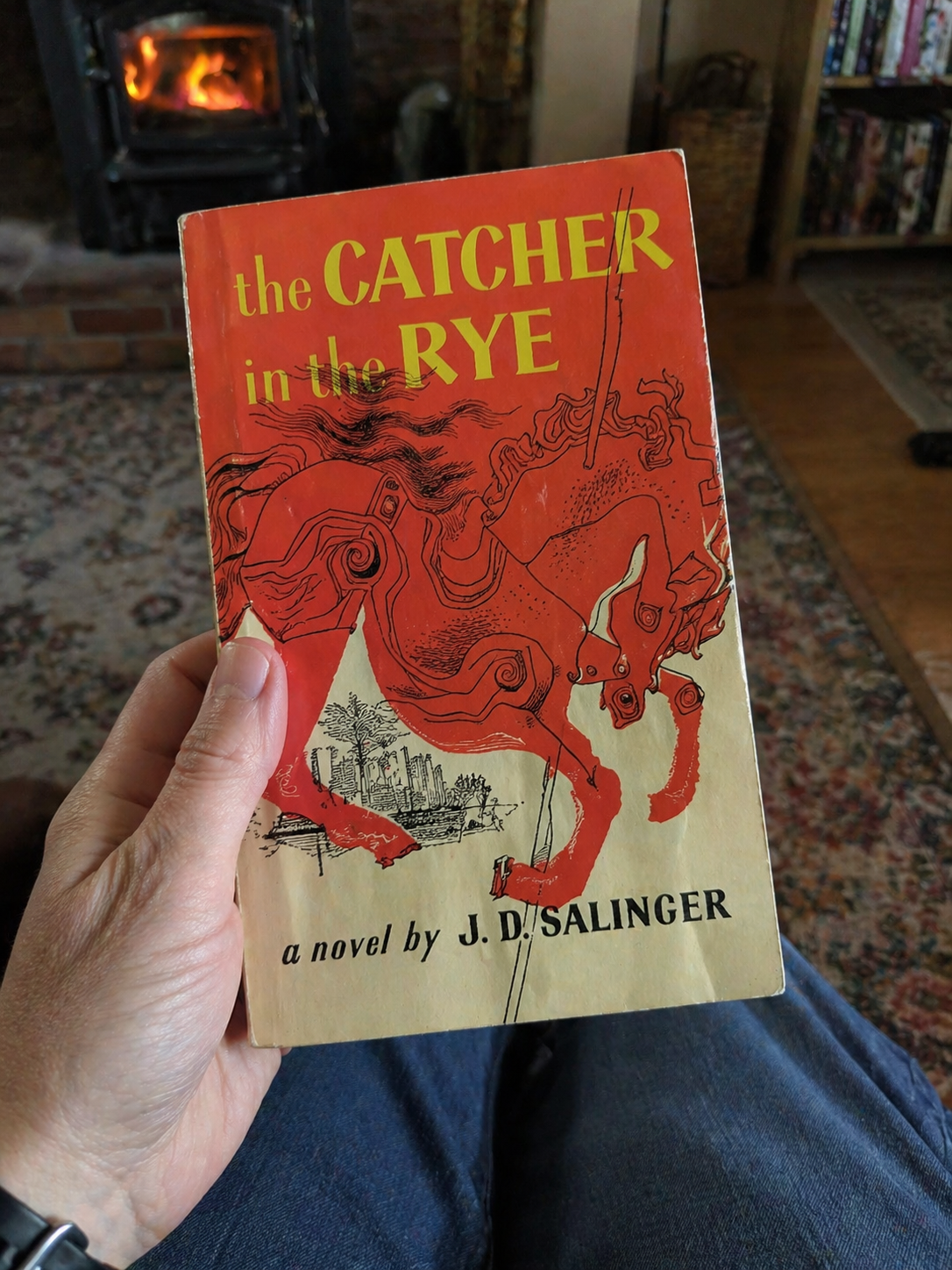
There are certain books that seem to belong to a particular time in life.
The Catcher in the Rye by J.D. Salinger is often thought of as one of them—a novel for the young, the restless, the questioning. Many of us first encountered Holden Caulfield as teenagers or young adults, reading his story as a reflection of our own uncertainty, frustration, and search for identity.
But something interesting happens when you return to this novel later in life.
Especially in retirement.
The book hasn’t changed—but you have.
And because of that, The Catcher in the Rye becomes a completely different experience.
Seeing Holden Through a Different Lens
When we read The Catcher in the Rye earlier in life, we tend to identify with Holden. His cynicism can feel justified. His frustration with the “phoniness” of the adult world resonates. His confusion mirrors our own.
But in retirement, that perspective often shifts.
You’re no longer Holden.
You’re someone who has lived through the very world he’s reacting to.
And that creates a powerful change in how the story feels.
Instead of identifying with him, you begin to understand him.
Holden’s sarcasm feels less like insight and more like a defense mechanism. His anger reads as vulnerability. His isolation feels heavier, more real.
What once felt like rebellion begins to feel like a quiet struggle.
And that shift—from identification to empathy—is what makes this reread so meaningful.
The Long View of “Phoniness”
One of Holden’s defining traits is his obsession with what he calls “phoniness.” He sees it everywhere—in adults, in institutions, in everyday interactions.
As a younger reader, this idea can feel sharp and accurate. It’s easy to recognize moments where people seem inauthentic or performative.
But with the perspective that comes from decades of life experience, that idea becomes more nuanced.
You begin to see that what Holden calls “phoniness” is often something else entirely.
It’s professionalism.
It’s social navigation.
It’s people doing their best in complicated situations.
In retirement, after years of navigating careers, relationships, responsibilities, and compromises, you understand something Holden doesn’t yet see:
Life isn’t always about being perfectly authentic—it’s about balance.
About knowing when to be honest, when to be kind, and when to simply move forward.
And that realization doesn’t make Holden wrong—it just makes him young.
A Deeper Understanding of Loneliness
One of the most striking aspects of The Catcher in the Rye—especially on a later reading—is how lonely it is.
Holden is surrounded by people. He interacts constantly. He moves through New York City, calls acquaintances, meets strangers.
And yet, he is profoundly alone.
As a younger reader, this loneliness can feel abstract—something present, but not fully understood.
In retirement, it often lands differently.
Because by this stage of life, you’ve likely seen loneliness in many forms. You’ve experienced distance, loss, transition. You understand that being surrounded by people doesn’t always mean being connected to them.
Holden’s inability to form meaningful connections becomes more poignant. His attempts to reach out—awkward, imperfect, sometimes self-sabotaging—feel more human.
You don’t just observe his loneliness.
You recognize it.
And in doing so, the novel becomes less about teenage rebellion and more about the universal human need for connection.
The Protective Instinct
Perhaps the most famous symbol in the novel is Holden’s fantasy of being “the catcher in the rye”—someone who stands in a field and catches children before they fall off a cliff.
When you read this younger, it can feel poetic, even romantic.
But later in life, it takes on a different meaning.
You begin to see it for what it is: a desire to protect innocence. A wish to shield others from the pain and complexity of the world.
And this idea resonates deeply in retirement.
Because by this point, many readers have spent years in roles that involve some form of protection or guidance—whether as parents, mentors, professionals, or simply as people who have tried to help others navigate life.
You understand the instinct.
You understand the impossibility of it, too.
Because life inevitably involves change, challenge, and growth. No one can be protected from everything.
And yet, the desire to try—that quiet hope to make things easier for someone else—remains powerful.
Holden’s fantasy becomes less naïve and more deeply human.
Memory, Nostalgia, and Letting Go
Retirement often brings with it a heightened awareness of time.
There’s more space to reflect. More opportunity to revisit the past.
The Catcher in the Rye is, in many ways, a novel about holding on—about resisting change, about wanting to freeze certain moments in time.
Holden clings to memories. He idealizes certain people, particularly his younger sister Phoebe and his late brother Allie. He struggles with the idea that things change, that people grow, that innocence fades.
As a retiree, this theme can feel especially familiar.
Because you’ve lived through those changes.
You’ve seen how quickly time moves. You’ve watched people grow up, move away, evolve. You’ve likely felt the pull of nostalgia—the desire to revisit simpler times, to hold onto moments that can’t be recreated.
And so Holden’s resistance feels less frustrating and more understandable.
You know that letting go isn’t easy.
You also know that it’s necessary.
A Story That Slows You Down
There’s something else that changes when you read in retirement.
You read differently.
Without the pressure of deadlines or obligations, reading becomes more reflective. You linger on passages. You notice details. You think more deeply about what you’re reading.
The Catcher in the Rye benefits from this kind of reading.
It’s not a plot-driven novel. It’s a voice-driven one. It unfolds through tone, through observation, through the subtle shifts in Holden’s perspective.
Reading it more slowly allows those nuances to surface.
You notice the contradictions in Holden’s thinking. The moments where his words don’t quite match his feelings. The glimpses of self-awareness that peek through his defensiveness.
The book becomes richer—not because it’s changed, but because you’re giving it more attention.
Compassion Over Judgment
Perhaps the most meaningful shift that comes with rereading this novel later in life is the move from judgment to compassion.
Younger readers often judge Holden—sometimes harshly. He can seem immature, contradictory, even frustrating.
Older readers tend to be more forgiving.
You see not just what Holden says, but why he says it. You recognize the fear beneath the bravado. The sadness beneath the sarcasm.
You understand that he’s trying to make sense of a world that feels overwhelming.
And that understanding creates space for empathy.
In many ways, this mirrors a broader shift that often comes with age—the ability to see people more fully, to recognize complexity, to respond with patience rather than quick judgment.
The novel becomes a quiet reminder of that.
Why This Book Belongs in Retirement
At first glance, The Catcher in the Rye might not seem like a natural choice for a retirement book club.
It’s often labeled as a coming-of-age story—a novel about youth, identity, and rebellion.
But in reality, it’s about something much more enduring.
It’s about how people navigate change.
How they cope with uncertainty.
How they search for meaning and connection.
Those are not just concerns of the young.
They are lifelong themes.
And in retirement, when life shifts in its own significant ways, those themes take on new relevance.
Reading this book at this stage of life isn’t about revisiting the past.
It’s about seeing it differently.
Final Thoughts
The Catcher in the Rye is a rare kind of novel—one that evolves with you.
It meets you where you are, but it also reflects how far you’ve come.
Reading it in retirement offers something unique: a chance to look back at a younger perspective with the clarity, patience, and insight that only time can provide.
You don’t read it the same way.
You can’t.
And that’s exactly the point.
Book Club Discussion Questions
- How did your perception of Holden change compared to when you first read the book (if you read it earlier in life)?
- What does “phoniness” mean to you now, and has that definition changed over time?
- How does the theme of loneliness resonate differently at this stage of life?
- What did Holden’s “catcher in the rye” fantasy mean to you on this reading?
- Did the novel feel more frustrating, more compassionate, or both?
Leave a Reply